
Bringing bold ideas to life through testing and execution
FollowBot
~~
FollowBot ~~
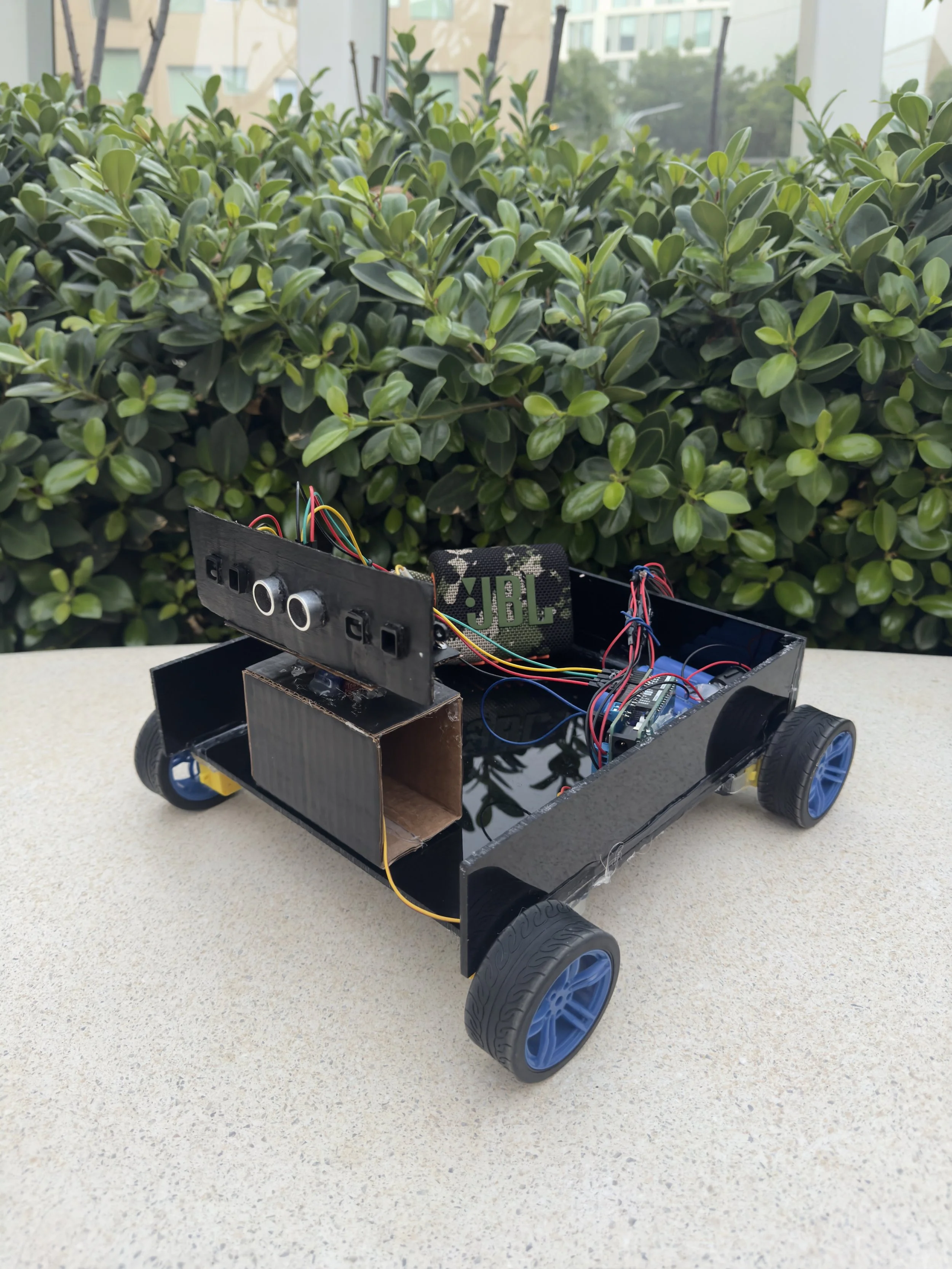
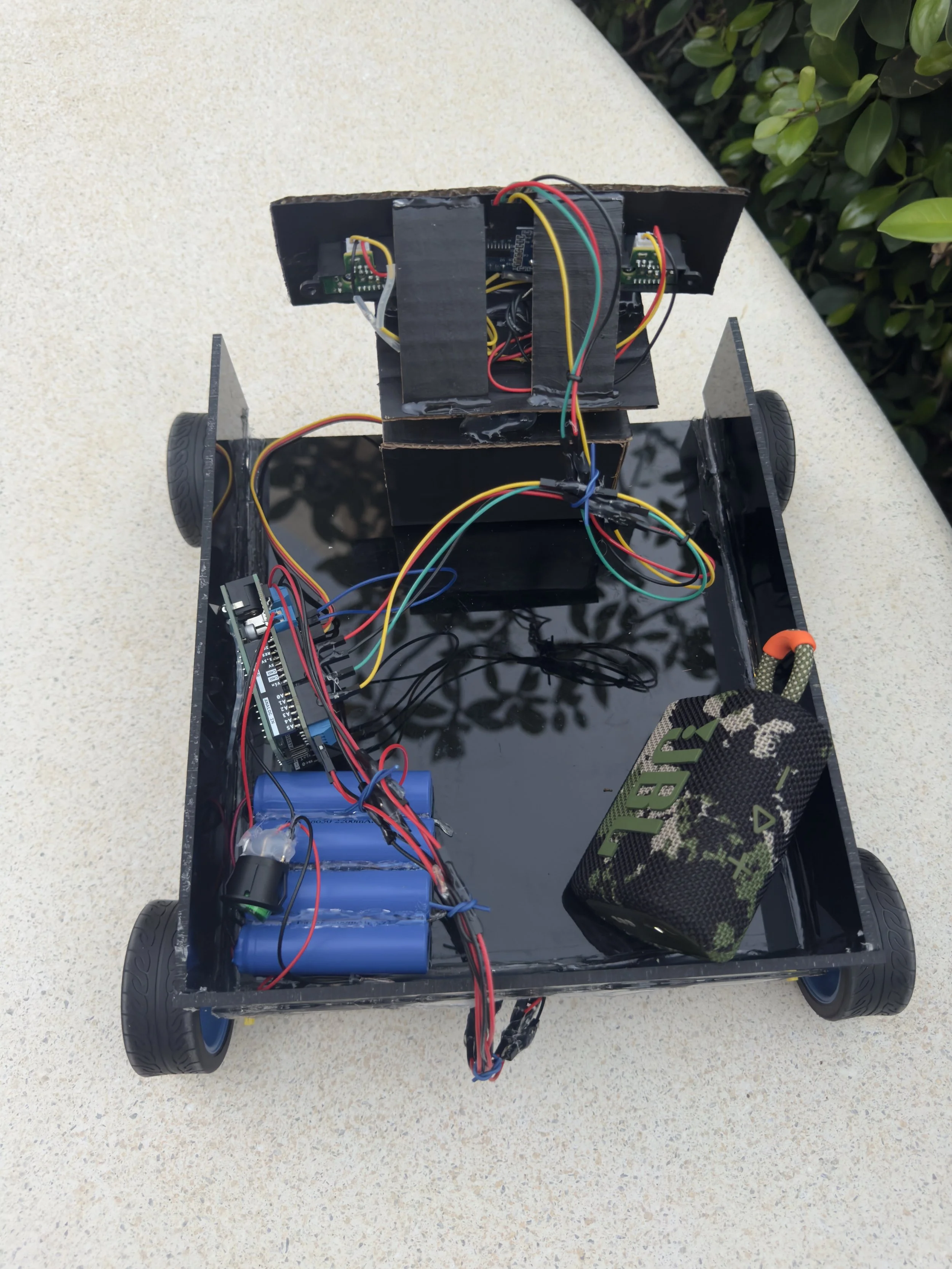
This was a project that fellow GLASS peer and I created for a class at NYUAD called 'Creative Robots and Tech,' taught by Professor Moore. The objective of the course was to design and build something meaningful and useful, with the potential to be further developed beyond the classroom.
We created a robot assistant called "FollowBot." The idea behind our creation was inspired by those moments when your hands are full, and there's no one around to help. In such situations, FollowBot would be incredibly useful, offering a practical solution by autonomously following and carrying what you can't.
To see the project in action just go to my youtube or click the link: HERE
The project took approximately two full weeks to complete and required constant iteration, troubleshooting, and refinement to ensure reliable performance. My primary role focused on the physical structure and mechanical design of the robot, as well as all wiring and hardware integration. I also contributed to the foundational code. My partner focused on the communication and control logic, finalizing the code to ensure all components worked together seamlessly.
Reimagining 6 Metrotech
~~
Reimagining 6 Metrotech ~~
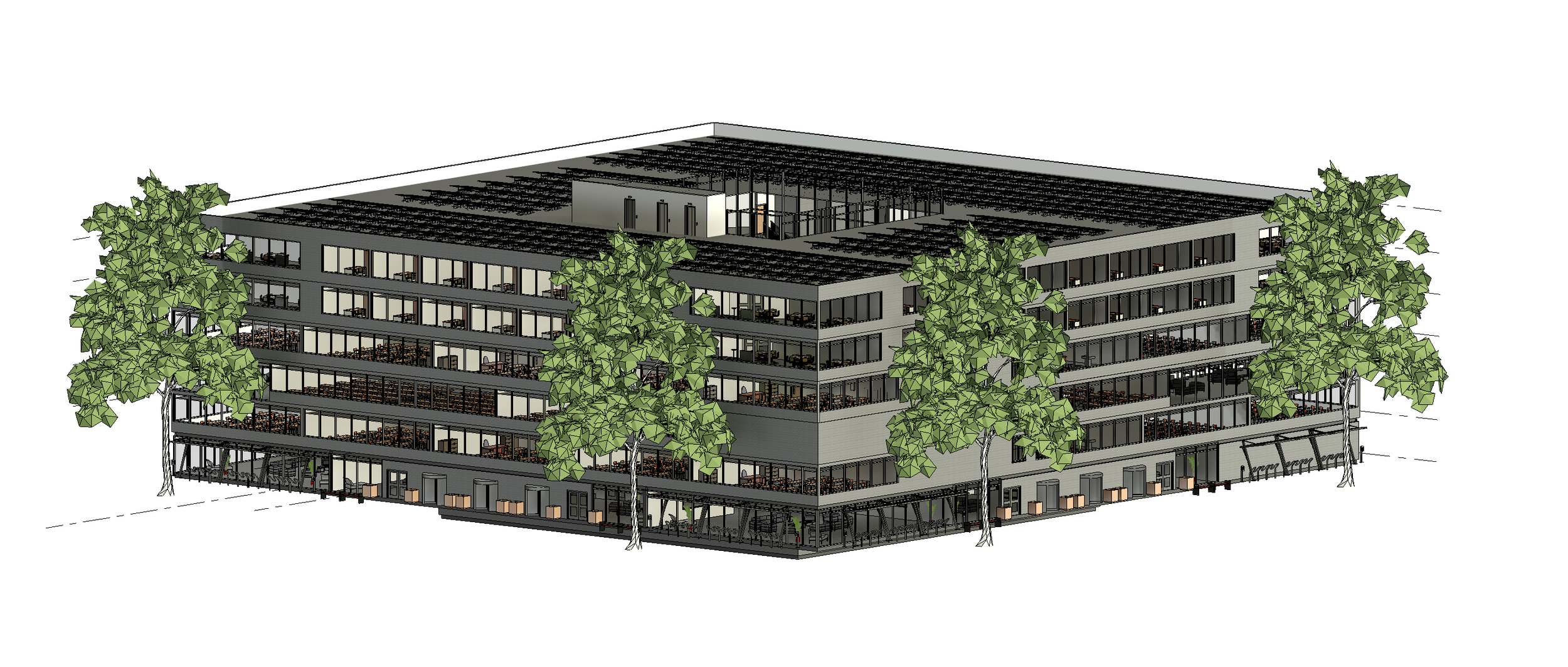
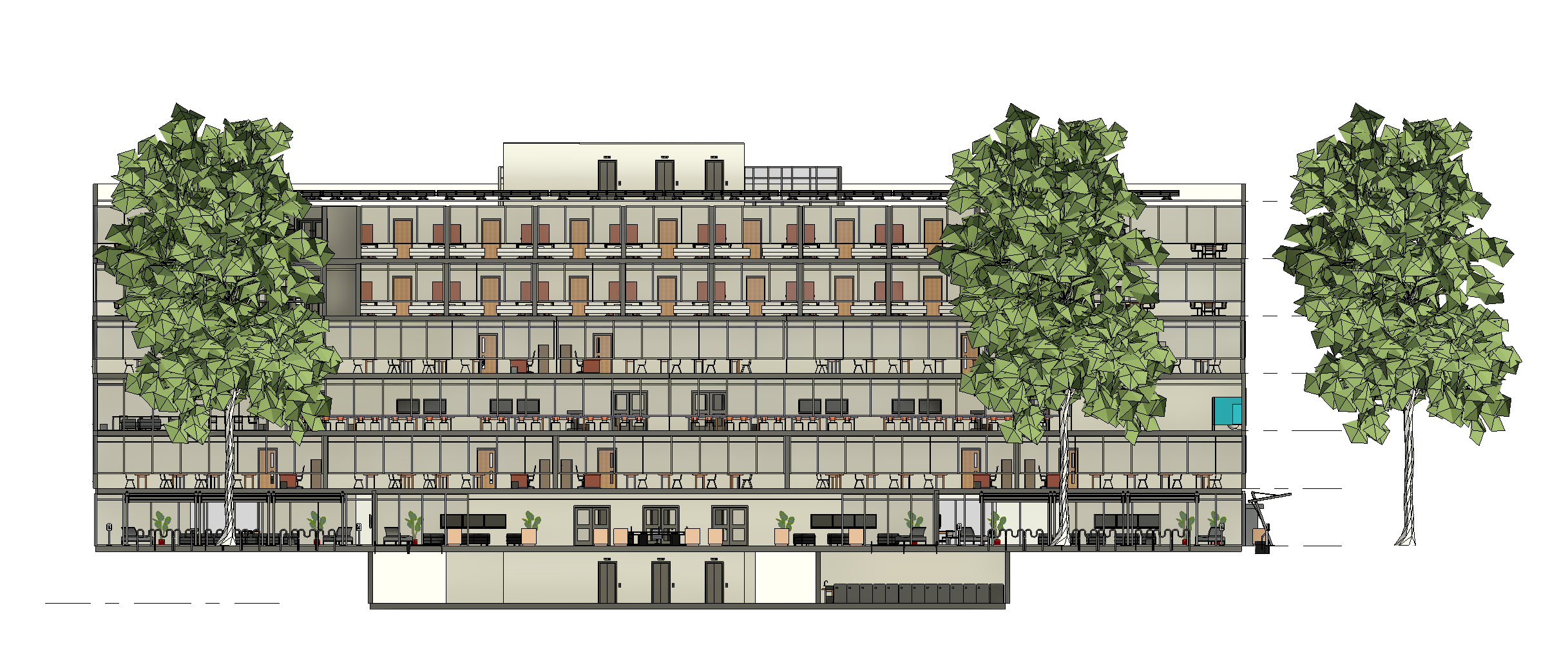
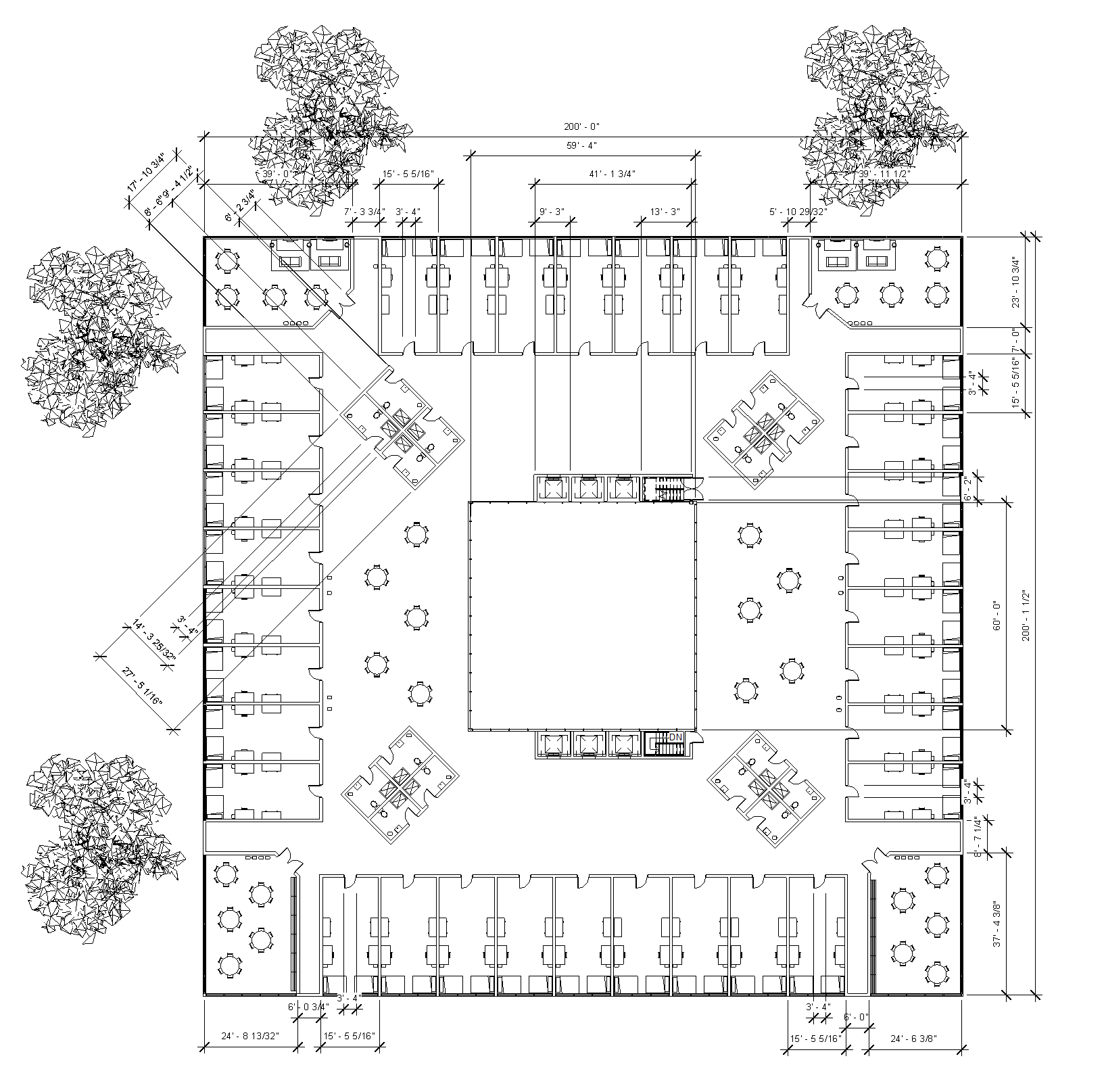
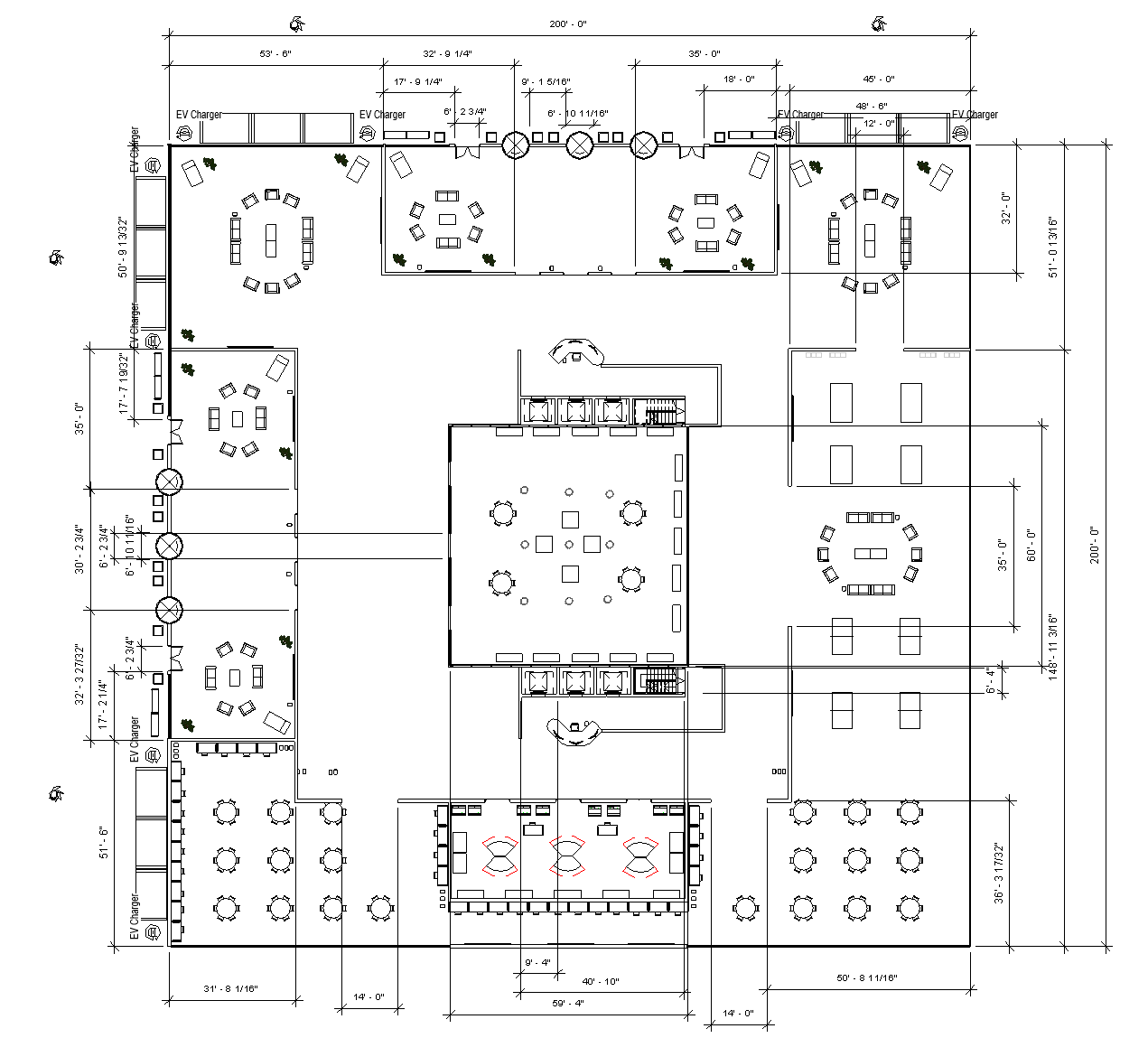
This project was completed using Revit and focused on a full scale redesign of 6 MetroTech Center, a building owned by New York University that serves as both an academic and student life hub. The goal of the project was to create a completely new building render that was inclusive, sustainable, and visually engaging, while still meeting the functional demands of a high traffic university space.
The redesigned building incorporated a wide range of features, including classrooms, a dining hall and café, a gym, and shared community spaces. From an engineering and infrastructure perspective, the project included detailed electrical schematics, plumbing layouts, and a fire protection system, ensuring the design was not only aesthetic but also technically sound. The final design met the criteria for a Gold standard LEED accreditation, emphasizing sustainability, energy efficiency, and accessibility throughout the space.
I served as the Head of Design for this project, taking full responsibility for all visual and architectural aspects of the render. I led the creative direction and executed the entire design as well as every schematic, while collaborating with two peers who supported the project in complementary roles. Together, we branded our design group as ACE Architecture, named using the first letters of our first names.
This project spanned approximately two months and was developed over the course of an academic semester. It required countless hours of iteration, attention to detail, and problem solving. While demanding, the experience was extremely rewarding, and I am proud of how the final render balanced form, function, and sustainability in a real world academic environment.
To view all logistics of this project visit the google drive: HERE
SOLEMATE
~~
SOLEMATE ~~
This project focuses on the development of Solemate, a smart insole system designed to analyze foot pressure and load distribution to support injury prevention and performance optimization in everyday athletes. The project is currently in progress, with an anticipated completion date of April 25th, 2026. The goal is to design and prototype a wearable insole that can accurately collect biomechanical data during dynamic movement while remaining comfortable, durable, and practical for everyday athletic use.
My role in this project is centered on hardware development. I am responsible for designing and assembling the physical insole, including sensor selection and placement, embedded electronics integration, and overall system layout within the sole. This involves optimizing sensor regions, managing power and space constraints, and ensuring the hardware does not interfere with natural gait while maintaining reliable data collection and wireless transmission.
The project is being developed over the course of an academic year and requires continuous iteration and testing.
To view the proposition of this project visit the google drive: HERE & HERE